Products
+


In the summer of 2026, the enthusiasm of the manufacturing industry will be even greater than the weather!
The automated production lines in Shenzhen are operating day and night without stopping. The machine tool workshops in the Yangtze River Delta are filled with sparks flying. The new energy factories in the southwestern hinterland are busy delivering overseas orders. And at the "joints" and "nerve endings" of these devices, there is an insignificant but crucial role - the encoder. It has been silently answering the most fundamental question: Where am I?

Over the past few decades, the role of encoders in the industrial system has been clear and unambiguous: they are "feedback components". They are responsible for converting mechanical positions into electrical signals and handing them over to the controller for processing. High accuracy, fast response, and stability are the key requirements - achieving these three points is considered fulfilling one's duty. As for optimizing the overall performance of the equipment, adapting to changes in working conditions, and predicting faults, these are matters for the controller and engineers. But things are changing.
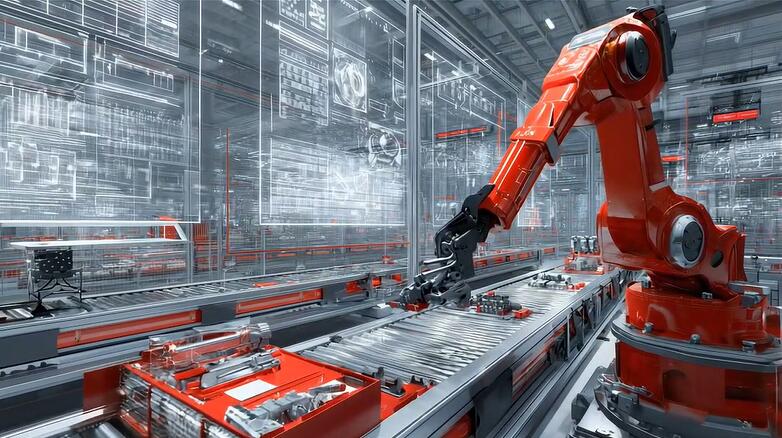
In the international market, the encoder industry is undergoing a profound paradigm shift. It is no longer merely a standalone position sensor; instead, it is evolving towards "intelligent sensing nodes" that possess edge computing capabilities, AI diagnostic functions, and industrial 4.0 connectivity. Data shows that the global market size for magnetic linear encoders reached 825 million US dollars in 2025, and is expected to maintain a compound growth rate of 6.7% in the coming years. The core driving force behind this momentum is the rigid demand from industrial automation and robotics industries.
Looking back at the domestic situation, 2026 marks the beginning of the "14th Five-Year Plan". The policy orientation has shifted from "filling the gaps" to "building strengths". The intensity of research and development funds has increased to 2.8%, embodied intelligence has been included in the government work report for the first time, and large-scale equipment renewal policies have been strengthened. These signals point to a clear fact: The country's urgent desire for high-end, independent, and reliable industrial sensing technologies has never been more pressing. Encoders can no longer remain content with the role of "feedback components". They must evolve.
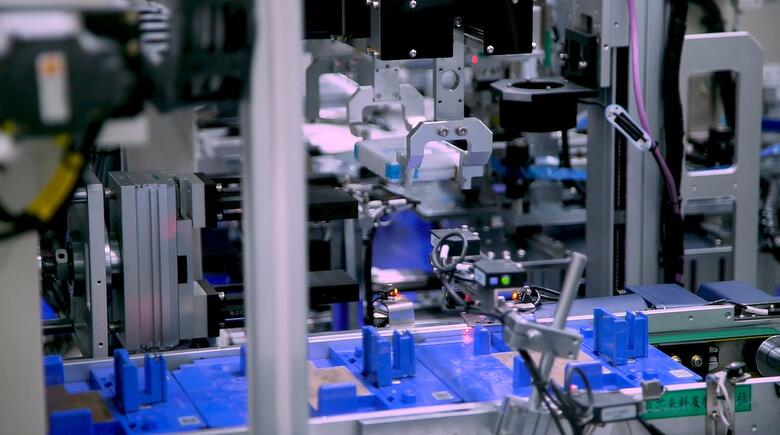
It was at this intersection that Tian Shang Digital and Mag Zheng Intelligent launched the FMG512 absolute value magnetic encoder. This was not a routine product iteration; rather, it was our redefinition of "what an encoder should be".
The introduction of FPGA hardware acceleration algorithms essentially embeds the "hard core" thinking of parallel computing into motion control. Data processing does not rely on software; instead, it is processed by hardware - the leap in response speed has given precision control in high-speed motion scenarios a real foundation. Combined with the independent wafer fabrication of core components, this is not only a guarantee of supply chain security but also a technical confidence that is fully aware of every layer of logic of the product.
What truly sets FMG512 apart from other encoders on the market is its "intelligence". We have injected AI deep training, dynamic verification, and non-intrusive optimization functions into this small reading head. When the equipment is running in the workshop, FMG512 is no longer just a tool that simply outputs signals passively - it can sense temperature changes for segmented temperature compensation and automatically adjust algorithm parameters when facing installation gap fluctuations or minor oil stains. With the soft power of AI, physical world hard errors are compensated.
This is a crucial leap that elevates "precise measurement" from laboratory standards to the "on-site adaptability" dimension.
The core advantage of the absolute value encoder lies in power-off memory and power-on ready use, eliminating the cumbersome zeroing procedure and enhancing safety and efficiency. FMG512 has refined this basic skill to the extreme - it can output stable absolute position within 350 milliseconds upon power-on. And in the face of the challenge of global supply chain restructuring, FMG512 has achieved deep domestication of algorithms and core components. It not only matches international first-class performance but also makes a solemn commitment to the customer's delivery cycle and long-term supply stability.
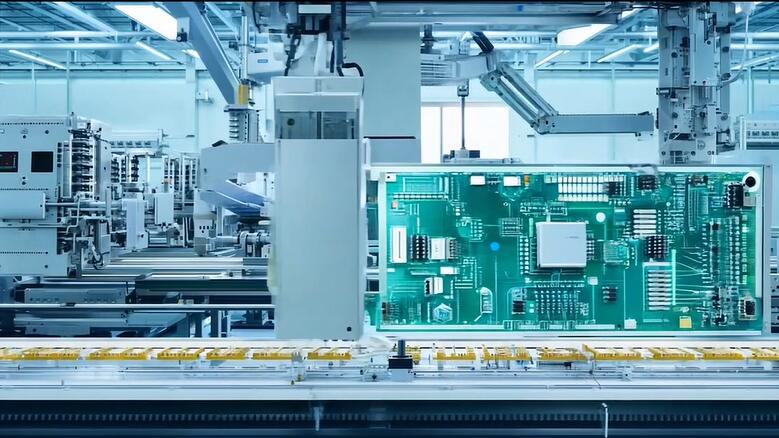
The application scenarios of FMG512 cover almost all the most active sectors of China's manufacturing industry at present: high-speed response of linear motor modules, extreme suppression of thermal deformation in CNC machines, positioning accuracy within microns at the joints of industrial robots, reliability requirements for new energy equipment, and strict environmental conditions for semiconductor equipment... It has been silently supporting every movement, every positioning, and every quality improvement in these fields.
"Controlled by Magnetism · Quality Standards" - Behind this slogan lies our continuous exploration of the boundaries of industrial sensing technology. From "feedback components" to "sensing nodes", the role of encoders is being redefined, and FMG512 is a hard-core answer given by this era.
With fifteen years of technical deepening, Tianxian Digital Intelligence and Magzhi Intelligent Technology have always focused on one thing: using more precise measurement, more intelligent control, and more reliable performance to contribute to the Chinese manufacturing industry's efforts towards a more efficient, more precise, and more sustainable future.