Products
+


The Chinese encoder industry is currently at a rare "time gap" window: there is still a clear domestic alternative space in the domestic high-end market, while the entry barriers in the two major markets of Europe and the United States are simultaneously rising. The China-US line is "technical barriers have not been removed under the mechanism of easing", and the China-EU line is "rule-based wall-building while negotiations are ongoing". For Tianxian Digital Intelligence, the most solid position is domestic alternative, the most realistic challenge is in the entry barriers of the two major markets, and the most important thing to be vigilant about is whether the speed of technology route iteration can match the production rhythm of the new market.
I. High-end Manufacturing: The Transition from "Scale Leadership" to "Value Creation"
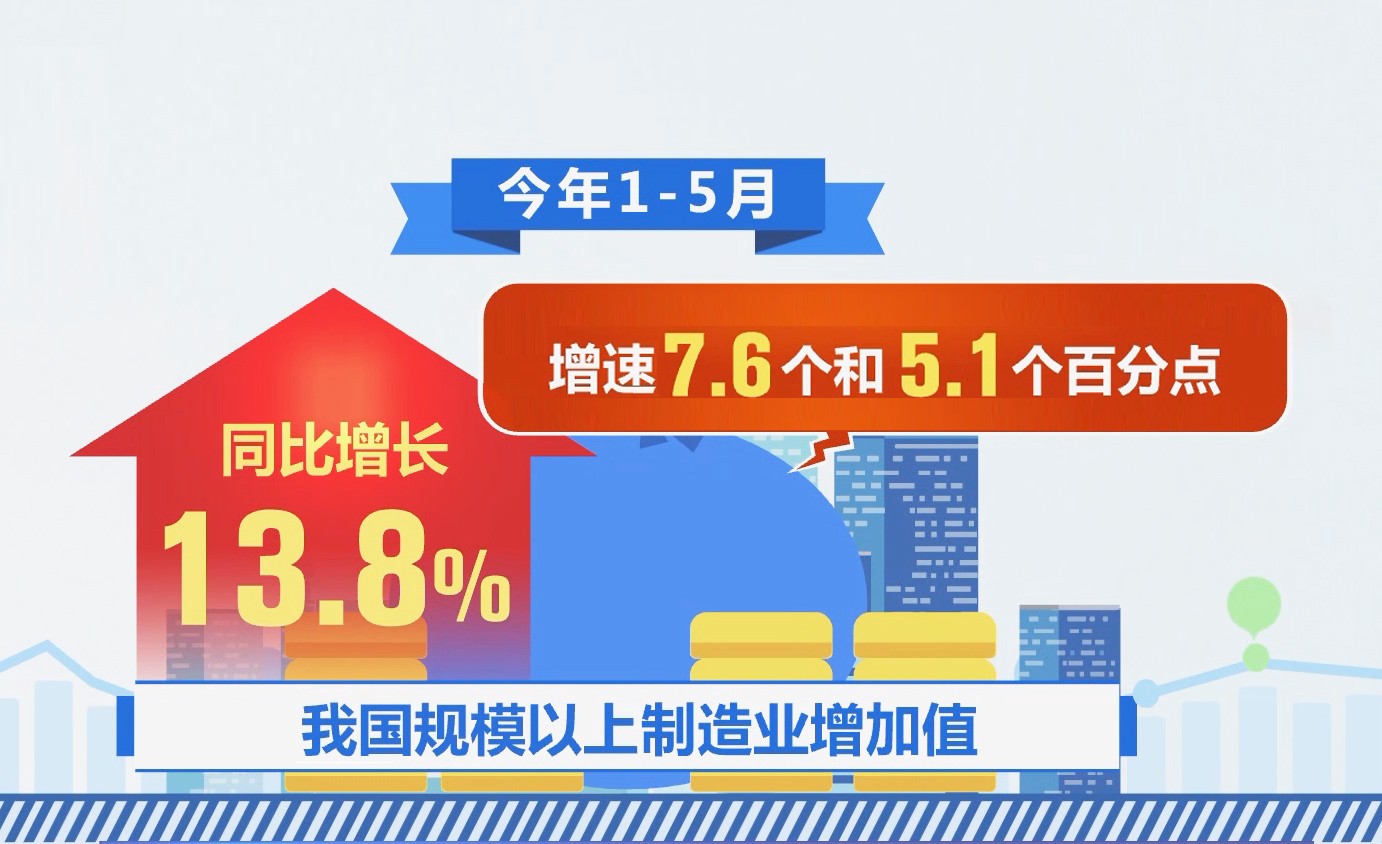
China's manufacturing industry's added value has remained the world's top for 15 consecutive years, and it has exceeded 30 trillion yuan annually since the "14th Five-Year Plan" period. In the first half of the year, the added value of high-tech manufacturing enterprises increased by 13.3% year-on-year, and the production of emerging products such as industrial robots and 3D printing equipment has significantly increased. The trend of upgrading to high-end and intelligent industries is clear.
However, the essence of the current stage has changed. According to authoritative experts in the industry, the biggest challenge is not the technology itself, but how to bring high-end technologies to the market and achieve a virtuous commercial cycle. "Technological breakthroughs can be achieved in the laboratory, but value realization must be implemented in the market."
This means that the core contradiction of high-end manufacturing is shifting from "whether it can be manufactured" to "after being manufactured, who to sell to and in what way to sell." The encoder, as the "perception nerve" of industrial automation, happens to be in the middle of this proposition: Technological domestic substitution has achieved a substantive breakthrough, but the game rules in the market are being rewritten by external forces.
II. Encoder Industry: Domestic Replacement is the Right Time, and the Racing Track Logic is Elevating
The size of the Chinese encoder market is approximately 1.35 to 1.54 billion US dollars in 2026, accounting for 35% to 40% of the global market, with a growth rate of 10% to 12%, significantly higher than the global average. The absolute value of encoders is growing at 8.9%, far exceeding the incremental type; the domestic substitution rate of magnetic encoders has exceeded 50%, and it has established a cost-performance advantage in scenarios such as new energy vehicles, wind power, and AGV.
The breakthrough pace of domestic encoder enterprises is accelerating. In the field of robot encoders, the global market share of Chinese enterprises will rise to 16.7% by 2025, and the domesticization rate of magnetic sensor SoC design has increased to 41.2%, up nearly 20 percentage points from 2020. The penetration rate of magnetic encoders in industrial robot joint modules has exceeded 58.9%, and the environmental adaptability advantage of the magnetic scale route is being verified by the market.
But the racing track logic is undergoing two key changes. First, from "independent modules" to "board-level integration." Encoder ICs are shifting directly to be embedded in motor drivers and robot joints, and the "IC + magnet + software" model gives chip suppliers greater discourse power in the value chain. Second, humanoid robots are redefining encoder standards. A single humanoid robot requires more than 30 encoders, and it is expected to trigger an industry explosion point from 2026 to 2027. This poses requirements far beyond traditional industrial scenarios for ultra-thin miniaturization, high-precision absolute types, and impact resistance performance.
III. China-US Line: Data Improves, but "Technical Barriers" Have Never Relaxed
The China-US economic and trade relationship in 2026 presented a contradictory appearance. In August, China's exports to the US increased by 34.4% year-on-year, and the cumulative growth for the first eight months was 6.2%. The trade surplus with the US expanded to 29.18 billion US dollars. Bilateral trade has maintained an upward trend for five consecutive months since it turned positive in April.
However, the background of the recovery requires a careful examination. The high growth in August was largely driven by the low base in the same period of 2025 - when exports to the US were at a low level. More importantly, the US's high-tech control over China has not loosened along with the recovery of trade data. The US International Trade Commission launched an investigation in February 2026 to revoke China's permanent normal trade relations status. The National Defense Authorization Act explicitly prohibited the use of Chinese AI models in the defense system and restricted the purchase of Chinese information technology equipment by federal agencies. The Federal Communications Commission updated the certification rules and no longer recognized the test reports from Chinese laboratories.
Although the complete encoder was excluded from the 301 tariffs, the upstream high-precision MEMS chips, special ceramic bases, and other core components still face classification risks and supply uncertainties. The strategic color of the US's technological competition against China has not changed: Washington views China's rise as a structural threat, and delaying China's technological upgrading is a priority across parties. This means that the export environment for consumer-level intelligent products to the US is improving, but high-end encoder products involving advanced manufacturing will not have a fundamental breakthrough in the short term.
IV. China-Europe Route: This is the More Direct Challenge
The total volume of China-Europe trade is still increasing, but the trade tools of the EU are upgrading from "case-by-case anti-dumping" to "systemic containment", and the target is clearly pointed at China's high-tech manufacturing enterprises.
The most alarming thing is the enforcement strength of the EU's "Foreign Subsidy Regulation" (FSR). The European Commission has launched investigations into Chinese-funded enterprises through "dawn raids" (unannounced on-site inspections), including entering the premises, seizing accounting books, conducting on-site inquiries, and sealing evidence. Refusing or obstructing the investigation will result in a fine of 1% of the global turnover of the previous fiscal year. The FSR guidelines released in January 2026 further clarified the logic for identifying "targeted foreign subsidies": if the subsidies directly or indirectly support enterprises' economic activities in the EU, the European Commission will presume that it can enhance their competitive position in the EU. Tianxian Digital Intelligence, as a national high-tech enterprise, if it participates in competitive procurement or receives relevant government support in the European market in the future, there is a theoretical risk of being examined by the FSR.
At the same time, the EU is systematically promoting supply chain diversification. The EU is preparing the "Solidarity Instrument", providing financial support to European enterprises to reduce their reliance on the Chinese supply chain. In July, anti-dumping duties were imposed on Chinese-made tires and an anti-dumping investigation was initiated against Beijing ducks. The downstream customers of encoders - industrial robots, machine tools, and automation equipment manufacturers - if accelerate the transfer of production capacity to European localities or third countries, their export demand will face structural compression.

V. Analysis of the Market Situation in the Magnetic Grating Encoder Industry
The core strength of Tianxian Digital Intelligence lies in its leading position in the domestic substitution of absolute value magnetic grating encoders. Magnetic encoders have strong anti-interference capabilities, controllable costs, and are adaptable to harsh environments (resistant to oil, dust, and vibration). They possess advantages that cannot be replaced by photoelectric encoders in scenarios such as linear motor modules, new energy, laser processing, and stone and woodworking machinery. The application fields of the products precisely correspond to the largest incremental market for the downstream of the encoders.
However, three structural pressures need to be acknowledged:
First, the technical requirements for humanoid robot joints are redefining the standards for encoders. The requirements for the joint space in terms of ultra-thin miniaturization, high-precision absolute type, and shock resistance are extremely strict. The magnetic grating route needs to continuously break through in terms of integration in the joint space.
Second, the trend of board-level integration may change the competitive landscape. If the functions of encoders are increasingly embedded in motor drivers and joint modules, the value chain position of traditional independent encoder suppliers may be compressed. It is necessary to assess whether to extend to chip-level solutions or module-level solutions.
Third, the intensity of competition during the window period for domestic substitution is rapidly increasing. Domestic encoder enterprises, driven by capital, are accelerating expansion. The advantages of the pioneers need to be maintained through the speed of technological iteration and the depth of customer binding.

In summary, we will continue to focus on developing the domestic alternative base (servo, machine tools, robots), seizing the supply chain entry opportunities brought by the continuous high growth of industrial robot production and the first year of mass production of humanoid robots. We will regard emerging markets as the direction for increasing exports, closely monitoring the FSR compliance risks in the European and American markets, and assessing the feasibility and risks of "exporting products". At the same time, we will conduct strategic evaluations on board-level integration and actively lay out on emerging technologies such as inductive technology, to avoid losing the leading position during the transition of technology routes.