Products
+


The current global advanced manufacturing industry is undergoing a profound restructuring. From the carbon border adjustment mechanism in Europe, to the "Chip and Science Act" in the United States, and the continuous strengthening of technological barriers in the high-end equipment sector by Japan and Germany, technological sovereignty and supply chain security have become the focus of competition among countries. In this game, the pressure faced by Chinese manufacturing is not limited to the "tippy-top" fields such as lithography machines or aircraft engines; more concealed and more urgent challenges often lie in the most basic links - such as the position feedback of a module, the anti-interference ability of an encoder, or the "one millimeter" that is invisible but crucial on the production line.
This one millimeter determines whether the linear motor module can precisely position during high-speed movement; it determines the repeatability accuracy of semiconductor equipment in a vacuum clean environment; it determines the trajectory consistency of industrial robots during welding and assembly; and it also determines whether domestic automated equipment is perceived as "usable" or "good" in the eyes of international customers.
For a long time in the past, the high-end displacement sensor market was dominated by German and Japanese brands. Haidenhan, Renishaw, Xi Ke - these names have almost become synonymous with precision and reliability. Domestic complete machine manufacturers and module manufacturers have limited choices when selecting models. It's not that they don't want to use domestic products, but domestic products do indeed have gaps in anti-interference, repeatability accuracy, and long-term stability.
However, the international situation is breaking this inertia. The uncertainty of supply chain delivery times, the intensification of trade barriers, and the increasing attention of more and more end customers to the "domestication rate of core components" have jointly created an unprecedented window period. More and more automation equipment manufacturers have realized that completely relying on overseas brands for the lifeblood of key sensing components is increasing the risk.

Tianxian Dizhi and Magizheng Intelligent are precisely the representatives that have accelerated their breakthroughs during this critical period. As a leading national high-tech enterprise in the field of magnetic sensors in China, this company, with 15 years of technological accumulation, did not opt for the low-end alternative route. Instead, it started from the fundamental principles and made solid engineering optimizations in core aspects such as differential Hall effect, signal processing, and anti-interference design. The company's LPZ and other incremental magnetic scale encoders are typical products of this technical approach.
When evaluating an industrial encoder, one should not only look at the ideal data in the laboratory, but also consider its viability in real production lines. The design concept of LPZ is very clear: it does not seek extreme parameter demonstrations, but pursues long-term, stable, and repeatable position feedback in complex industrial environments.
It adopts non-contact measurement and forms an open magnetic measurement system with magnetic rulers. There is no mechanical wear, and there is no risk of optical windows being contaminated. In scenarios such as stone cutting, woodworking engraving, and aluminum door and window processing with high dust, the failure of traditional photoelectric encoders is often gradual and concealed - losing one pulse today, misjudging one position tomorrow, until the production line suddenly stops. However, LPZ, with its strong tolerance to oil, dust, vibration, impact, and even magnetic field interference, has minimized this uncertainty to the lowest level.
What is even more worthy of attention is the intelligent error LED indicator light. This is a seemingly insignificant but extremely practical function in actual operation. Maintenance personnel can tell whether the encoder is working normally by looking at it, without the need to disassemble or install software. For production lines that operate 24 hours a day, this "one-eye diagnosis" ability directly translates into lower fault detection time and higher overall equipment efficiency.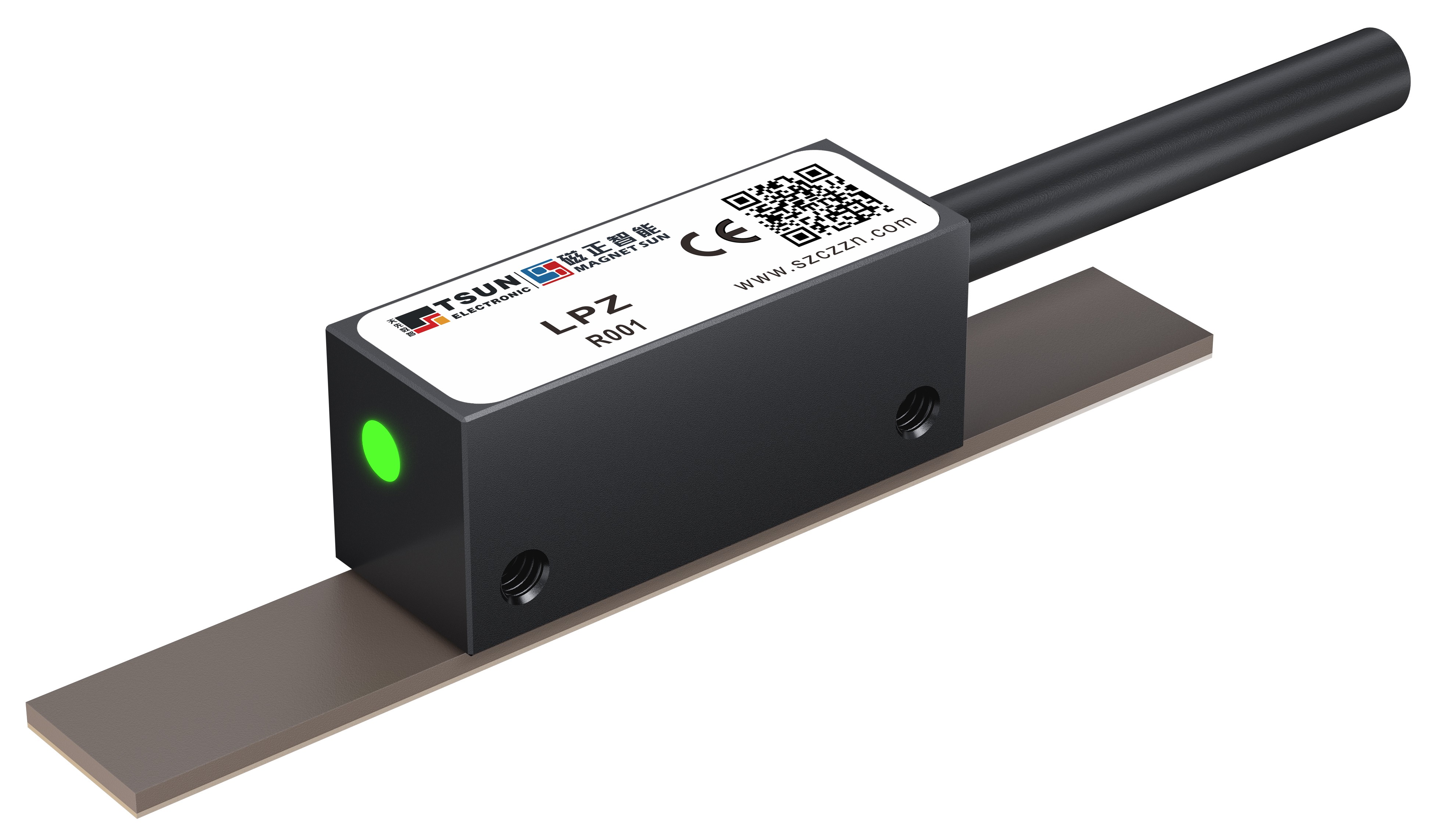
At the signal output level, LPZ chose the industrial standard RS422 differential signal. This is not an advanced option, but it is a mature, reliable, and highly resistant to common-mode interference solution. For system integrators and module manufacturers, this means lower adaptation costs, shorter debugging cycles, and fewer on-site signal anomalies.
Another highlight of LPZ's product is the "zero limit" for measurement length and the flexible configuration of the origin signal. In scenarios such as linear motor modules, long-stroke gantry machines, and multi-motor variable torque motors, the measurement travel is often not standardized. If the encoder can only be adapted to fixed-length magnetic scales, it either leads to waste or limits the design of the equipment. LPZ supports any measurement length, whether the customer needs 300 millimeters or 30 meters, it can be solved within one product framework without special customization or performance compromise.
The two selectable modes of origin signal output - unique origin or periodic origin output - reflect the profound understanding of this product for different application scenarios. For machine tools that require an absolute reference point, the unique origin is a must-have; for applications involving multi-motor collaboration and module assembly, the periodic origin output can significantly simplify the control logic and reduce the computational pressure on the controller. This flexibility is precisely what distinguishes LPZ from many fixed-configured imported products. It does not exist to replace anything; it is designed to adapt to the rich and rapidly evolving application needs of China's automation industry.
The application areas that LPZ targets, from linear motor modules, industrial robots, to semiconductor equipment, and new energy production lines, are all the most competitive and active tracks in global manufacturing. When an automated equipment equipped with a domestic high-performance encoder is exported to Southeast Asia, the Middle East, Eastern Europe, and even South America, it not only gains a cost advantage but also forms differentiated competition in terms of supply chain response speed and local services. In other words, LPZ is not just an encoder; it is a credential of capability for domestic equipment when "going global". When overseas customers ask "Where do your core sensing components come from?", answering "From a leading domestic magnetic displacement sensor enterprise" is much more assertive than those vague statements in the past.
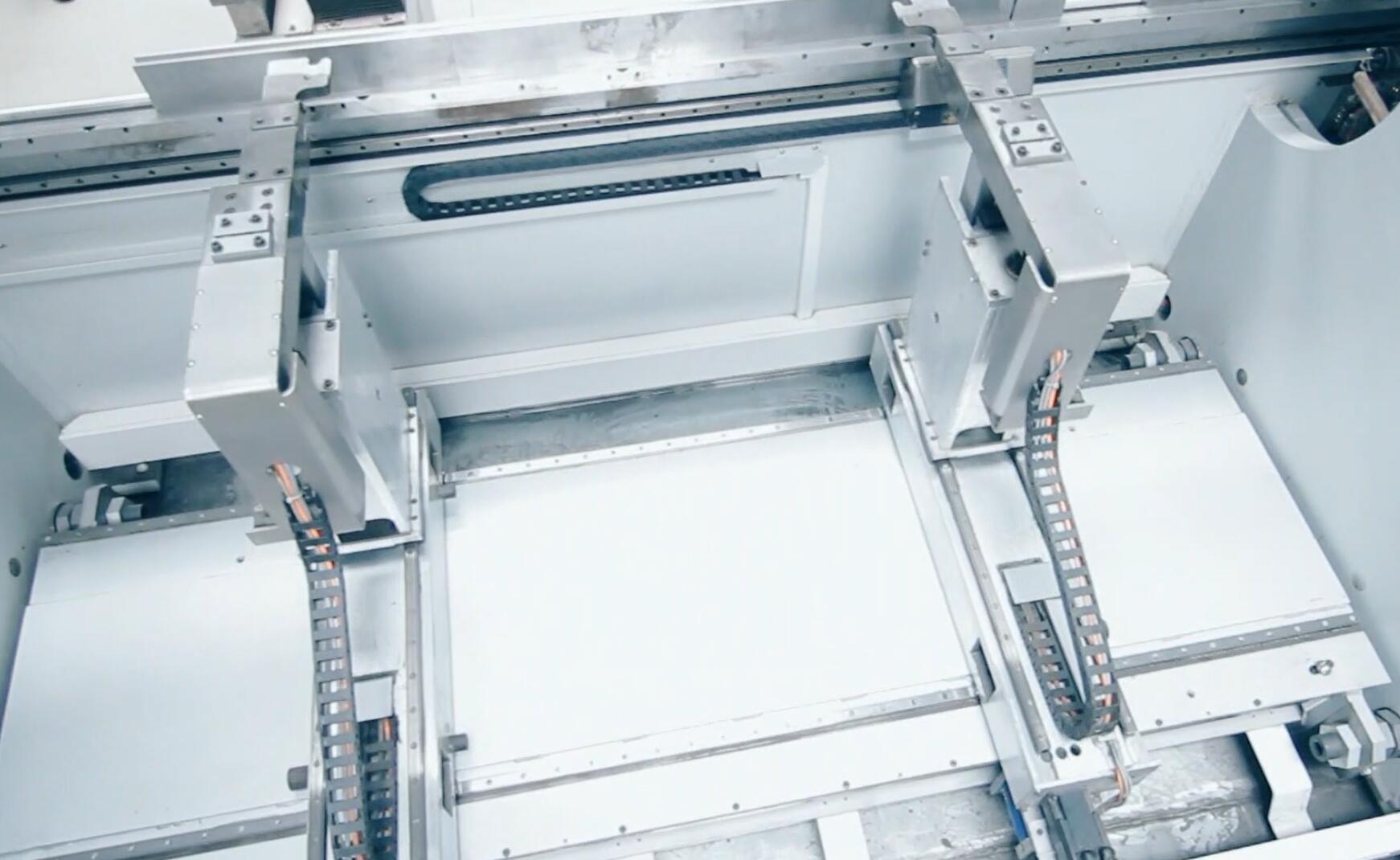
Looking back at the product features of the LPZ incremental magnetic encoder - high resolution, high repeatability accuracy, non-contact and resistant to harsh environments, intelligent error reporting, flexible origin, and arbitrary length - you will find that it does not overwhelm its competitors with an exaggerated parameter, but rather with a complete engineering solution, answering the most basic and core question in the industry: Can your encoder ensure that my equipment runs stably all the time? In the competition of advanced manufacturing, what truly determines victory or defeat is often not those high-profile technological breakthroughs, but thousands upon thousands of basic components that never break down in the daily operation over and over again. The value of LPZ lies in this - it is not written on the presentation slides of the conference, but is installed in the equipment, proving itself millimeter by millimeter under the tests of oil stains, vibration, dust, and long-term operation. If you are looking for a reliable, stable and long-term deliverable position feedback solution for linear motor modules, machine tools, industrial robots or any automated production line, domestic encoders like LPZ are good choices.